Documentary Knowledge Centre
Faith & Practice
Pilgrimage in India
Why sacred journeys matter across Indian religious traditions, from local temple visits to river bathing, circumambulation and major gatherings.
Journey as religious practice
Pilgrimage is important in several of India’s religious traditions, though its meanings and obligations differ. A journey may be made to a temple, shrine, river, tomb, monastery, gurdwara or landscape associated with a deity, teacher, saint or sacred event.
Hindu tirtha and sacred geography
In Hindu traditions a pilgrimage place may be described as a tirtha, literally a crossing-place. Rivers, confluences, mountains and cities can become part of sacred geographies linked by stories and prescribed routes. Varanasi is one of the most prominent examples, but pilgrimage networks extend across the subcontinent.
Buddhist, Jain, Sikh and Muslim journeys
Buddhists travel to places associated with the Buddha’s life, including Sarnath. Jains visit temples and sites associated with Tirthankaras. Sikhs travel to major gurdwaras, including the Harmandir Sahib in Amritsar. Muslim pilgrimage includes the global hajj to Mecca as well as visits, in some traditions, to important shrines and Sufi dargahs in India.
Mass gatherings and intimate journeys
Pilgrimage ranges from solitary or family journeys to enormous public gatherings. UNESCO describes Kumbh Mela as a major congregation centred on sacred river bathing. Scale should not obscure individual motivation: people may travel for devotion, vows, mourning, thanksgiving, community, tradition or personal reflection.
Photography and respect
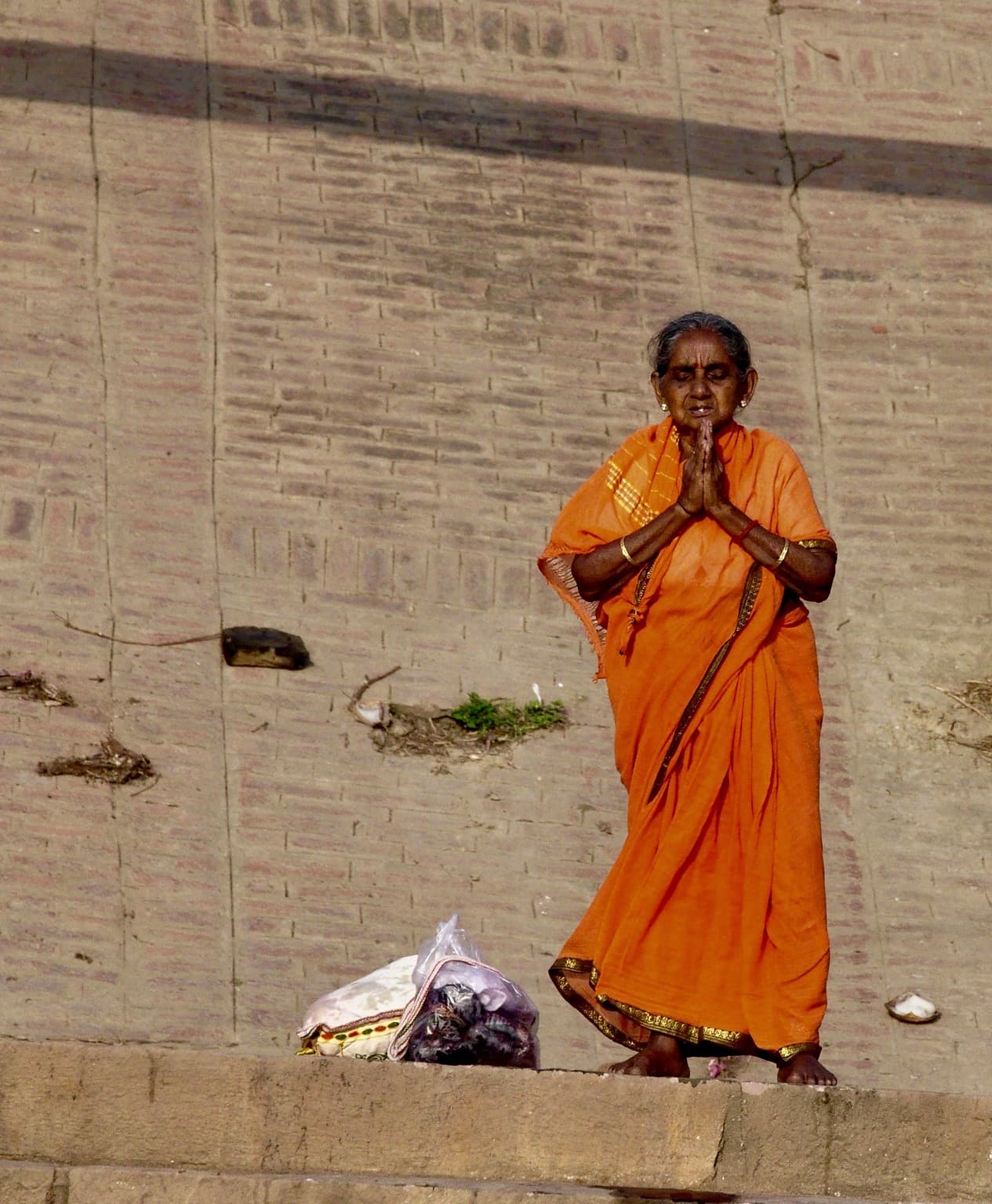
Pilgrims are not performers for the camera. The archive should distinguish a public religious gathering from an invitation to intrude upon every private act within it. Captions should describe what is documented and avoid assigning spiritual motives to individuals unless those motives are known.
Sources & further reading · 3
These sources support the historical and cultural context of this article. They are provided so interested readers, students and researchers can continue beyond the introductory text.
- Kumbh Mela — UNESCO Intangible Cultural Heritage
Context for pilgrimage, sacred bathing, ascetics and the transmission of living religious practice. - Iconic Riverfront of the Historic City of Varanasi — UNESCO World Heritage Centre
India’s World Heritage Tentative List submission; useful for the riverfront, urban history and living cultural traditions. - Ancient Buddhist Site of Sarnath — UNESCO World Heritage Centre
Sarnath was inscribed on the World Heritage List in 2026.
Related documentary material

Return to experience
Explore the Knowledge Centre →Read documentary stories →Continue discovering →