Documentary Knowledge Centre
Places & History
Painted India: Architecture, Surfaces and Decoration
Colour in India is often architectural: painted facades, murals, shrines, temple surfaces, signs, steps and repeated repainting create public environments in which colour is built into place.
Colour can belong to the building itself
A visitor may first notice colour in clothing, but architecture also carries it. Limewash, painted plaster, murals, decorated temple surfaces, shop signs, tiles, doors, railings and painted steps can turn colour into a spatial experience. Weathering and repainting add further layers rather than leaving a single permanent finish.
Planned colour and accumulated colour are different
Some urban environments have regulated or historically recognisable facade treatments; others acquire colour incrementally through private painting, religious imagery, commerce, political signs and repairs. Documentary photographs should distinguish a planned architectural palette from the layered visual complexity that comes from continuous use.
Jaipur shows the relationship between planning, craft and facade
UNESCO describes Jaipur as a deliberately planned eighteenth-century commercial city with continuous market facades, major public squares, temples, havelis and enduring craft traditions. Its visual identity is inseparable from the relationship among urban planning, building surfaces, trade and craft.
Sacred architecture can be highly visual
Temples and shrines may use painted figures, floral ornament, coloured cloth, flags, lights or pigments, while mosques, gurdwaras, Jain temples and Buddhist sites have their own material and architectural traditions. The presence or absence of strong colour depends on period, region, community and local practice.
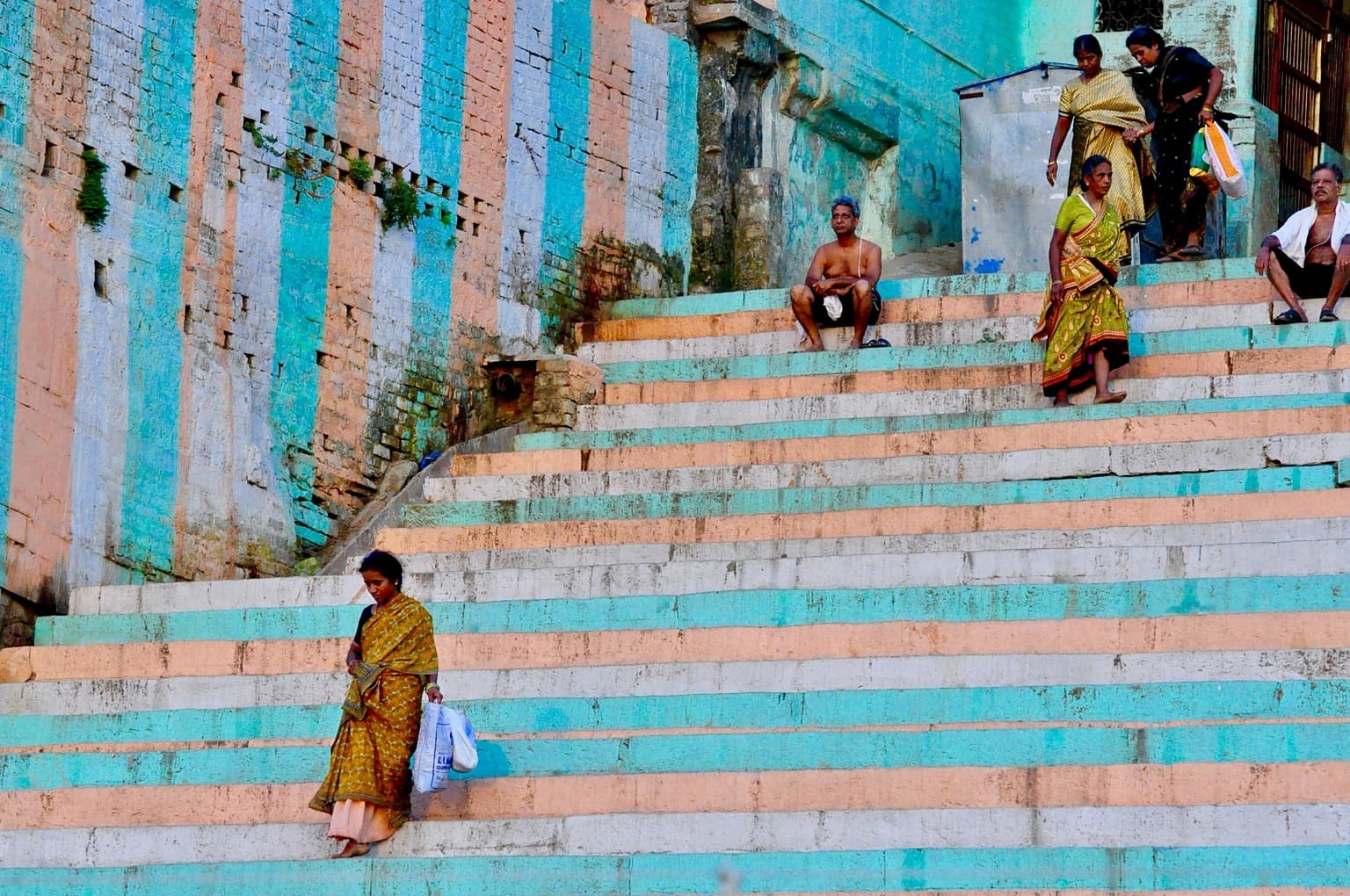
Varanasi demonstrates colour through use
On the ghats, painted steps, murals, shrines, signs and clothing sit against stone, river water and weathered walls. The strong colour in a photograph may therefore come from contrast between a relatively muted architectural base and highly saturated surfaces added through paint, cloth or ritual practice.
Sources & further reading · 2
These sources support the historical and cultural context of this article. They are provided so interested readers, students and researchers can continue beyond the introductory text.
- Jaipur City, Rajasthan — UNESCO World Heritage Centre
Context for Jaipur’s planned urban form, continuous facades, markets, crafts and living architectural traditions. - Temple cloth celebrating Krishna (Picchavai) — The Metropolitan Museum of Art
Example of colour, textile and devotional imagery working together in a Hindu temple context.
Related documentary material

Return to experience
Explore the Knowledge Centre →Read documentary stories →Continue discovering →